
Bridge Or Implant After Tooth Loss? A Clear Decision Guide
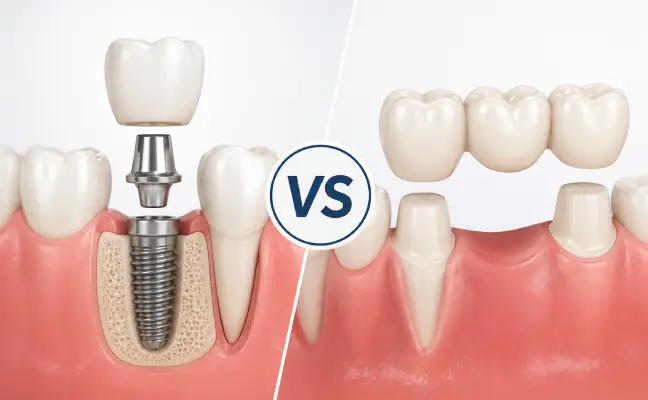
Losing a tooth can affect more than just your smile. When a gap is left untreated, nearby teeth can slowly drift, your bite can change, and the space can become harder to keep clean. If you are comparing options for a dental bridge in Apex, NC versus an implant, the best choice is usually the one that fits your oral health, your timeline, and how you want to care for your replacement long term.
At Apex Smiles, Dr. Vinay N.Chirnalli and our team help patients from Apex and Cary sort through the tradeoffs in a practical way. In our experience, the decision is clearest when you compare what each option asks of your teeth (and your daily hygiene), not just how it looks on day one.
TL;DR - How Most Patients Decide Between A Bridge And An Implant
A bridge is often chosen when you want a shorter overall timeline or when neighboring teeth already need crowns. An implant is often chosen when you want to replace the tooth without relying on adjacent teeth, and you have the bone and gum support to do it predictably.
- Choose a bridge when speed matters or the teeth next to the gap already need coverage.
- Choose an implant when you want a stand-alone replacement that helps preserve the bone in the area.
- Think about hygiene: bridges require cleaning under the replacement tooth; implants require careful gum maintenance.
- Ask about tooth preparation: bridges usually involve reshaping neighboring teeth; implants do not.
- Plan for longevity: both can last many years with good care, but maintenance risks differ.
In our previous blog, "Root Canal Vs. Extraction: How We Decide What Is Best," we discussed how dentists weigh "save vs remove" when a tooth is badly damaged. In this article, we focus on what happens after tooth loss: choosing between a bridge and an implant.
What A Bridge And An Implant Actually Replace
Both options replace the visible part of a tooth, but they do it differently:
- Dental bridge: replaces the missing tooth with a connected set of crowns, usually supported by the two neighboring teeth (the abutment teeth).
- Dental implant: replaces the root with an implant post in the jawbone and then supports a crown on top.
If you want to review the fundamentals, our dental bridges page explains how bridges are designed to close a gap and support your bite.
For implant basics, our dental implants page explains how implants function as a root replacement and what that can mean for stability.
Dental Bridge In Apex, NC: When A Bridge Is Often The Better Fit
People searching for dental bridges in Apex, NC are often looking for a reliable solution that restores chewing and appearance without a long healing phase. A bridge may be a strong choice when:
You Want A Shorter Overall Timeline
While every case is unique, a traditional bridge is often completed in fewer steps because it does not require the same type of healing time an implant needs.
The Neighboring Teeth Already Need Crowns
If the teeth next to the gap have large fillings, cracks, or prior dental work, using them as bridge supports can make sense. Many bridges are supported by crowns, and our dental crowns page explains how crowns help restore strength and shape.
You Prefer A Non-Surgical Tooth Replacement Option
A bridge does not involve placing an implant into the jawbone. For some patients, that is an important comfort factor.
Dental Implant In Apex, NC: When An Implant May Be The Better Long-Term Choice
If you are researching a dental implant in Apex, NC, you may be looking for the closest "like a real tooth" feel and function. Implants are often a great fit when:
You Want To Avoid Relying On Adjacent Teeth
A key advantage of an implant is that it stands on its own. That means the teeth next to the space typically do not need to be reshaped just to support the replacement.
Preserving Bone In The Missing-Tooth Area Matters To You
After tooth loss, the jawbone in that area can change over time because it is no longer stimulated by a root. An implant can help provide functional stimulation in that area once integrated and restored.
You Are Looking For A Tooth Replacement That Feels Very "Single-Tooth"
Many patients describe implants as feeling closer to a natural tooth during chewing because the crown is supported by an implant root rather than connected to neighboring crowns.
Bridge Vs Implant: The Tradeoffs Patients Should Compare
1) Tooth Preparation
- Bridge: usually requires reshaping the teeth on either side of the gap.
- Implant: usually does not require reshaping neighboring teeth to support the crown.
2) Daily Cleaning And Maintenance
This is where many "great on paper" choices succeed or fail in real life.
- Bridge: you need to clean around the supporting crowns and under the replacement tooth (often with floss threaders or special cleaning tools).
- Implant: you need consistent brushing and flossing focused on keeping the gums healthy around the implant crown.
3) Comfort And Feel
- Bridge: can feel very natural, especially once you get used to the shape; it is anchored to nearby teeth.
- Implant: often feels the most like a stand-alone tooth because it replaces the root and crown.
4) Timeline And Planning
A bridge is often a more straightforward "restore the gap" plan. An implant plan usually involves more staging because it requires healing before the final crown.
5) Long-Term Risks (Different, Not Better/Worse)
- Bridge: the supporting teeth carry the load; future decay or issues on those teeth can affect the bridge.
- Implant: the implant itself is not susceptible to cavities, but gum health and bone support are critical for long-term stability.
How We Help You Decide In Apex And Cary (A Practical Chairside Approach)
During a missing-tooth consultation, our team typically looks at your bite, the health of the neighboring teeth, gum condition, and the shape of the space you are trying to replace. Then we map the decision to your priorities, such as minimizing tooth alteration, keeping the timeline shorter, or choosing the option that is easiest for you to clean daily.
If gum health is part of the conversation, you can also review our periodontal therapy page to understand why stable gums and bone matter when planning any restoration.
Dental Bridge In Cary, NC: Does The Choice Change By Location?
Whether you are considering a dental bridge in Cary, NC or Apex, the clinical decision is the same: match the solution to your oral health and goals. What often changes is patient preference based on schedule and lifestyle. If you travel frequently or have a packed calendar, you may prioritize a plan with fewer stages. If you are thinking decades ahead and want a stand-alone replacement, you may lean toward an implant evaluation.
FAQs
Many patients say a dental implant feels most like a natural tooth because it replaces the root and stands on its own. A bridge can feel very natural too, but it is supported by the neighboring teeth and requires extra cleaning under the replacement tooth.
Not always, but leaving a gap can allow nearby teeth to shift, change your bite, and create harder-to-clean areas. If you are unsure, an exam can help you understand how the missing tooth affects function, appearance, and long-term stability.
A traditional bridge typically requires reshaping the two teeth next to the missing space so crowns can support the bridge. That is a key tradeoff to discuss, especially if those neighboring teeth are healthy and have never needed restorations.
A bridge is often completed in fewer visits over a shorter time. A dental implant usually takes longer overall because healing time is needed before the final crown is placed. Your timeline depends on your oral health, bone support, and treatment plan.
Gum health and bone support affect both choices. A bridge relies on the support of the neighboring teeth and gums. An implant needs healthy bone and stable gum tissue. If periodontal issues are present, treatment and stabilization are often recommended before final tooth replacement.
Related Reading
- Dental Bridges in Apex and Cary NC
- Dental Implants in Apex and Cary NC
- Dentures in Apex and Cary NC
- Financial Information
Conclusion
A bridge and an implant can both be excellent ways to replace a missing tooth, but they solve different problems. If you want a shorter overall timeline or your adjacent teeth already need crowns, a bridge may be the most practical option. If you want a stand-alone replacement and you are a good candidate, an implant may be a strong long-term choice.
If you would like help deciding between a bridge and an implant, call Apex Smiles at 919-380-8888 to schedule a consultation.
Request A Tooth Replacement Consultation