Root Canal Vs. Extraction: How Dentists Help You Decide
If you are dealing with a painful tooth, you may be stuck on one big question: should you save it with a root canal, or remove it? For many patients searching for Root Canal Treatment Cary Nc options, the real goal is not just getting out of pain. It is choosing the option that is most predictable for your long-term health.
At Apex Smiles, our team helps patients from Cary and Apex understand what we see during the exam and what that means for your next steps. Dr. Vinay N.Chirnalli typically starts with a diagnosis-focused conversation so you know what is happening inside the tooth, what can be saved, and what replacement planning would look like if the tooth is not a good candidate to keep.
TL;DR - A Practical Way To Choose Save vs Remove
A root canal is usually recommended when the tooth can be predictably restored and you want to keep your natural bite. Extraction is often chosen when the tooth is too damaged to rebuild reliably or when replacement planning makes more sense for your situation.
- Save the tooth when it is restorable and you can protect it afterward (often with a crown).
- Remove the tooth when cracks, severe decay, or bone support make long-term success unlikely.
- Do not delay if there is swelling or infection signs; waiting can reduce your options.
- Plan replacement early after extraction to help prevent shifting and bite changes.
- Ask for a clear "why" behind the recommendation, including what could change the plan.
In our previous blog, "Implant Dentistry: Best Solution for Missing Teeth | Cary NC," we discussed why implants are often a strong long-term tooth replacement option. In this article, we focus on the decision point before that: whether the tooth can be saved or whether extraction is the better move.
What We Are Treating: Infection, Damage, Or Both
Root canal therapy treats infection or inflammation inside the tooth (the pulp). Extraction removes the tooth entirely. Both can relieve pain, but the "best" option depends on what is causing the symptoms and whether the tooth can be rebuilt afterward.
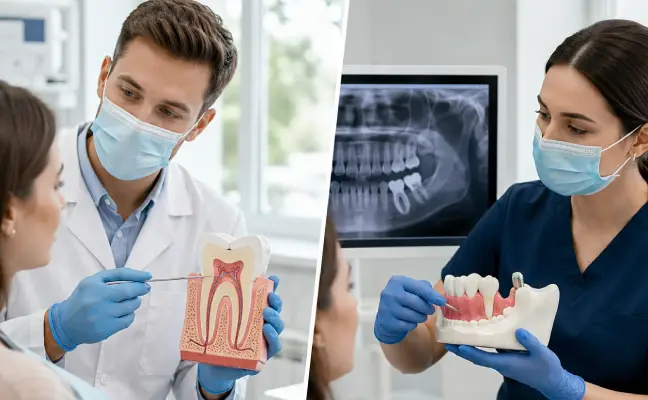
Patients are sometimes surprised to learn that a tooth can be badly infected with minimal pain, or painful with no deep infection. That is why diagnosis matters. At Apex Smiles, we commonly rely on an exam, your symptoms, and dental imaging to understand what is happening at the root and surrounding bone.
How We Decide If Root Canal Treatment in Cary, NC Makes Sense
People searching for Root Canal Therapy Cary Nc are usually hoping to avoid losing a tooth. In many cases, saving the tooth is possible, but only if the tooth is considered "restorable," meaning it can be sealed, rebuilt, and expected to function well afterward.
Key Factors Your Dentist Evaluates
-
How much healthy tooth structure is left
If decay or a large fracture has removed too much tooth, a filling or crown may not have enough stable structure to hold onto. A root canal alone does not "fix" a weak tooth; it removes infection so the tooth can be restored.
-
Cracks and fracture risk
Cracks can change the plan. Some cracks can be treated; others extend in a way that makes long-term stability unpredictable. We explain what we see and what it could mean for the tooth over time.
-
Bone and gum support
Even if the tooth can be treated internally, it still needs solid support. If bone loss or gum issues are advanced, extraction and replacement may provide a more stable long-term result.
-
Whether the tooth can be sealed and protected
After root canal treatment, the tooth often needs a strong restoration to prevent future breakdown. Many patients benefit from a crown, and our dental crowns page explains how crowns restore strength and function.
When Extraction May Be The Safer Choice
Extraction is not "the easy way out." It is sometimes the most responsible plan when keeping the tooth is likely to lead to repeated problems. In our experience, the hardest cases are not the ones where the tooth is clearly savable or clearly not, but the gray areas where the tooth might be saved short-term but not predictably long-term.
Common Reasons We Recommend Removing a Tooth
- Severe structural damage: the tooth cannot be rebuilt in a durable way.
- Non-restorable decay: decay extends too far below the gumline or undermines key structure.
- Complex fractures: cracks that compromise the root can make success unlikely.
- Recurrent issues: repeated infections or restorations that have failed in the past.
- Strategic treatment planning: sometimes overall bite health and long-term planning favors removal and replacement.
If You Extract, What Comes Next: Replacement Options That Protect Your Bite
One reason the decision matters is what happens after. A missing tooth can allow surrounding teeth to shift and may change the way your bite fits together. Replacement is not only cosmetic; it can be protective.
Common Ways to Replace a Missing Tooth
A dental implant is a popular option because it replaces the tooth root and crown without relying on neighboring teeth. Learn more about dental implants and how they can support function and stability.
A dental bridge can replace a missing tooth by anchoring to adjacent teeth. Our dental bridges page explains the basics and when a bridge may be a good fit.
For patients missing multiple teeth, a partial or full denture may be part of the plan. Visit our dentures page to review common denture options and goals.
Cost And Insurance: Why "Cheaper Today" Is Not Always Cheaper Later
Patients often ask whether root canal treatment or extraction costs less. The honest answer depends on what is included. Extraction can look less expensive upfront, but replacement (implant, bridge, or denture) changes the total cost. A root canal often needs a strong restoration afterward, which also factors into the overall plan.
For a clearer look at payment options, you can review our financial page before your visit and bring your questions to the appointment so we can help you understand what applies to your situation.
What Happens If You Wait Too Long?
If a tooth is infected, waiting can allow the infection to progress. That can increase pain, swelling, and complexity. It can also affect surrounding bone, which can make later replacement planning more difficult.
If you have significant pain, swelling, or a sudden change in symptoms, it may be worth reviewing our emergency dentistry page and contacting our office for guidance.
FAQs
When a tooth is restorable, saving it with root canal therapy often preserves natural biting function and can help avoid a missing-tooth gap. If the tooth cannot be predictably restored (for example, due to severe fracture or very little healthy tooth structure), extraction and a planned replacement may be the safer option.
We evaluate the extent of decay or infection, the amount of remaining tooth structure, gum and bone support, and any cracks. We also consider whether the tooth can be sealed and rebuilt (often with a crown) in a way that is expected to last.
Not always. Many back teeth benefit from a crown because they handle heavier chewing forces and can become more vulnerable after treatment. Front teeth may not require a crown in some cases. The best choice depends on how much tooth structure remains and how the tooth is used when you bite.
An infection can worsen over time and may lead to swelling, pain, and additional damage to surrounding bone and tissues. Early evaluation helps you keep more treatment options available and can prevent more complex problems.
Common replacement options include a dental implant, a dental bridge, or a denture (partial or full depending on how many teeth are missing). The best option depends on the tooth location, the health of nearby teeth, bone support, and your preferences.
Related Reading
Conclusion: A Clear Plan Beats A Quick Decision
The decision between a root canal and extraction should be based on diagnosis and long-term predictability, not just getting through today. If the tooth can be restored reliably, root canal therapy can be a tooth-saving option that protects your bite. If it cannot, extraction with a thoughtful replacement plan can help you avoid ongoing issues.
Schedule A Tooth-Saving Or Tooth-Replacement Consultation
If you are in Cary or Apex and want help deciding between saving or removing a problem tooth, contact Apex Smiles to schedule an evaluation. Call 919-380-8888.